


The follow-up to the incredibly addictive puzzle game Picross DS, Picross 3D moves the picture finding gameplay into the next dimension, a game of block breaking and brain teasing that's also one of the best Nintendo DS games of the year.
Instead of presenting the player with a blank canvas and numbered clues with which a player must study to draw a simple, pixelated picture, Picross 3D hands the player a giant block from which to carve a 3D model. Numbers on the side of each remaining cube inform the player how many blocks must remain in each row or column. Smash the rest to discover what's underneath. Each hidden treasure is simple and abstract, a collection of ultra low fidelity 3D representations of dogs, scissors, breakdancers, pianos, hot air balloons and hundreds of other items.
Picross 3D is a game about paying attention, thinking logically to determine your next carving spot, and mostly about being awesome.


I was initially skeptical of Dementium II. I had a hard time believing that the DS' diminutive dimensions could offer a foreboding, atmospheric horror experience. But I couldn't deny the ambitous nature of the game's design, and while it doesn't always succeed, Dementium II surprised me with its quality and depth.
When the game begins, you awaken in a prison cell with no clue as to how you got there or who tossed you in and threw away the key. That initial head-scratcher, however, is put on hold when your prison turns into hell on earth. Prison guards are replaced by grotesquely misshapen monsters, and the prison itself mutates into an industrial torture facility. The world will shift back and forth from the mundane to the horrific in a heartbeat, leaving you to question your character's sanity while also keeping you on your toes. Unfortunately, the game's puzzles involve a fair bit of backtracking, which robs these otherwise memorable environments of their impact over time. Dementium II's lackluster save system, which is still a big improvement over its predecessor's near-non-existent series of checkpoints, also forces you to replay large sections of the game, leading to further fatigue. Dementium II's combat is similarly hit-or-miss. Guns handle well, and the game's first-person perspective means that it avoids many of the camera issues commonly associated with the survival-horror genre (think Resident Evil's fixed cameras). However, the enemy A.I. is particularly bad when it comes to aiming, meaning it misses far more often than it hits; it also exhibits some brain-dead behavior, like running smack into walls with an alarming frequency. Melee weapons are, excuse the pun, a double-edged sword, adding an extra layer of variety to combat, but lacking any real impact. Their blows land with the weight of plastic Halloween costume replicas.All of these issues cut into Dementium II's quality, which is a shame because, at its best, it's a legitimately spooky ride. The enemies' hair-raising howls and the game's ability to touch upon our deep-seeded fear of the dark lends a feeling of genuine dread to each encounter; combine this with a near-perfect take on the classic survival-horror trope of scarce ammo and health, and the game is able to create an atmosphere that is unrelentingly tense. The game's terrific visuals -- they exhibit surprising quality for a DS game -- help as well.

In 1996, Space Invaders company Tiato released a vertically-scrolling arcade shooter in Japanese arcades called Raystorm. A little bit later it showed up on the PlayStation, and was impressive looking on the system, especially considering the dated hardware. Nearly a decade and a half later, it is released onto XBLA and PSN (outside North America, for now) for 1200 Microsoft points, or $15. Is this classic shooter worth the price? Or are you better off spending you money elsewhere?
Raystorm was one of my favorite games on the PlayStation, so when the opportunity came for me to review it I had to take it and see how much they improved on the game. Unfortunately the answer here is not much. The game offers two different modes right away, with more to unlock later. Arcade mode is the original arcade game, while extra mode is a harder version of the game where some of the backgrounds are different, and the stage bosses change the way they attack and in some instances how to destroy them. There are eight total stages in the game, and depending on which mode you pick the stages change slightly. At the start of the game players have the option of choosing two different ships, one that fires bullets and directable lasers, and the other fires a straight forward laser and lightning. The first will, as the player collects power ups, start to resemble a spread gun. Likewise the second just gets a more powerful forward firing laser. The laser ship is more powerful; however it does not have the coverage that the bullet ship has. During game play there is a targeting reticle in front of the ship at all times. This is the locking mechanic, as targets are locked on to, players can fire a barrage of lightning or lasers at the target, depending on the ship. Some targets, including bosses, can be and are below the plane and thus can only be destroyed by using the lock on mechanic. Now for an HD release of an old arcade game, there is an expectation of some kind of improvement to be made, updated graphics, online play, etc. Unfortunately the only thing that was improved on were some textures, the rest stayed virtually the same.

Oh, look, another racing game for Xbox Live. Now, we wouldn’t be so dismissive if it weren’t for the glut of incredible four-wheelin’ games coming our way this month, including Split/Second and Blur. Still, something in our youth cried for us to try out Things On Wheels, a game that puts you in control of remote control cars as you race around tracks in and around a house, picking up power-ups to slow down the competition. After about a couple of hours, though, we could hear that same youth yawn out of sheer boredom.
Part of the problem is that Things On Wheels doesn’t really differ from the 80,000 other racing games available. There’s no stunt system, no variety to the power-ups (electric shocker, turbo boost, tire freezer and green shield, and occasional traps around the house), and nothing, aside from some creative track names, which shows any real ingenuity. The game is so average, we wanted to slap the word across every vehicle we drove in the game.
That’s not to say it doesn’t handle all right. Things On Wheels is playable for the most part. You can navigate turns, come off jumps, and execute power-ups with ease. However, most of the time, you’ll find yourself slipping to last place because of the scattershot collision detection. You’ll hit walls, dead ends, piano legs, the works…all while trying to navigate around them. Focus Home Interactive probably should’ve spent a little more time cleaning up this title, especially since it’s been delayed for so long anyway.The game looks pretty good. It runs at a (mostly) smooth 60 frames per second, even in split-screen multiplayer. The car models look okay as well, although the lack of paint jobs (there are only so many colors in the rainbow to use) force you to stick with something neon-ish. As for the sound, ugh. We have routine background tunes here, and nothing that would last five seconds in Split/Second. The sound effects fare no better, with weak sounding RC engines. We’ve heard Radio Shack models that sound meatier than this.
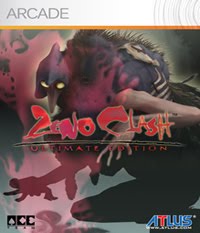
First-person games tend to be limited in variety. The vast majority of them are shooters, and for good reason – first-person shooters are easy to make and modify (compared to other types of first-person games). Shooters also are mostly easy to play, in the sense that many of them share a similar control scheme. Some first-person games try to bend the shooter formula a bit, but few overhaul it entirely. Zeno Clash is one of those games that try to redefine the first-person game experience, and while it’s problematic in some critical areas, it’s got a good amount of innovation and entertainment value. Zeno Clash is billed as a first-person fighting game. First-person games that focus on close combat are not new – Mirror’s Edge, the Condemned series, and the first Bushido Blade game come to mind as other examples – but there’s been few enough such games that Zeno Clash seems like a breath of fresh air. In Zeno Clash, you play Ghat, a fugitive who’s been falsely accused of murdering the leader of his clan, called Father-Mother. At first the plot may seem like a standard “clear your name” story, but…well, as you might have figured out by the murder victim being named “Father-Mother,” let’s just say it gets really weird, really fast. Sometimes it gets confusing, but at least it’s compelling enough to give you a good context to punch lots of fools in the face. Backing up the weird plot are even weirder visuals – let it not be said that Zeno Clash doesn’t have a unique visual style. It’s a pretty surreal fantasy landscape that focuses more on the disturbing aspects of fantasy rather than the pleasant ones. Zeno Clash’s graphical style brings to mind some of the album art of certain early heavy metal records. Think Brutal Legend on acid…well, even more acid. It’s a refreshing take on graphics that is distinctive enough that you can overlook its few technical issues. As unique as the graphical style is, playing the game is still pretty straightforward, focus on brawling aside – get from point A to point B, beating down whoever’s unlucky enough to stand in your way. Thankfully the control scheme for brawling is easy to understand. The triggers launch weak or strong attacks, and these attacks change depending on context. When standing, you punch; when grabbing, you can either knee your opponent in the face or elbow him on the head; when sprinting, you elbow people in front of you; and when combined with blocking, can deliver devastating kicks as counter-attacks. Kicking ass in this manner can indeed feel satisfying, as you can pull off some impressive moves with a few button presses. It’s pretty simple in theory, but the finer points of brawling in this manner can be problematic. For one, the triggers aren’t the best place to put your primary attacks in a brawling game, considering their pressure sensitivity. Secondly, when there are multiple enemies, it can be hard to manage. Focusing on one opponent is easy enough, but to change targets, you have to look at them with the right stick and then hit the focus button again.

Twin-Stick Shooters and bullet-hell games are well known to today's gamers, but what happens when Naval Warfare is also thrown into the mix? Aqua is the answer. This Xbox Live Arcade title is the first game to be developed by Games Distillery, a fairly new team that has yet to prove themselves in today's gaming market.
Aqua follows the story of Captain Benjamin Grey, an elite military officer of the Emperean fleet who has just returned victorious from the Gothean War. Joined by his newly appointed Engineer, Polly Edison, Grey decides to search for treasure hidden among the wreckage left behind from battles past and in doing so discovers much more than he bargained for. The Gotheans are back, and this time they have new found technology to not only start the Gothean War all over again, but to ensure victory as well. It is up to Captain Grey to quell the Gothean uprising before it gets out of hand using only his ship, his crew and the few remnants of the Emperean fleet. The story is hardly original but it does tie the levels together well and also features a few likeable characters, it's good enough considering there are a lot worse examples out there.
The gameplay is fairly simple, players take control of Grey's ship with the left stick and shoot with the right, it's this simple control scheme that makes twin-stick shooters a joy to pick up and play. Grey's ship however has more tricks up its....porthole? The ship can also fire torpedoes with the right trigger and lay mines with the left trigger. These weapons are not imperative to use but make things a whole lot easier when faced with tougher opponents in larger numbers. Later on in the game, players will have access to three different ships, each boasting different pros and cons, more powerful weaponry, upgrades and a squad of ships to accompany them. It's these choices given to players that truly make this game great, as more powerful items are spread evenly throughout the levels to keep the gameplay challenging and fun.The world of Aqua is very beautiful, that is when not being shot at.

n the early 90′s, if you were a gamer, chances are that the Doom franchise was a staple of your gaming rotation. While Wolfenstein may have come first, Doom is widely accredited with popularizing the first-person shooter genre. It’s no secret that FPS’s may be the lifeblood of modern gaming systems, and to return the favor Doom, and now Doom II, have been released on the Xbox Live Arcade. The question that looms over Doom II is: “Is it really a timeless classic, or has Father Time been unkind to it?”
Depending on who you ask, it seems that everyone has a different favorite Doom game. Up until Doom 3, the games were very much the same, with new levels being the only major change between titles. For what it’s worth, I had always considered Doom II to be my favorite of the Doom titles, but this was probably because it was one of my first computer games as a kid.
Upon loading the game on my 360, I realized very quickly how different this experience would be than my hours spent on the PC version. As a tot, “idDQD”, “idKFA”, and “idCLIP” were more important to me than all the BFGs in the world. For those of you not in the know, in order, those are the cheat codes for God Mode, all keys, weapons, and full ammo, and the ability to walk through walls. Even on the first few levels on the lower difficulties, it was apparent how frustrating the game would become. It seems that Doom, while a pioneer for the space marine formula, does not afford you the luxury of being a complete bullet sponge like Master Chief and Marcus Fenix.
When starting a new game for the first time, you’re prompted to select between the Hell on Earth campaign and the No Rest for the Living campaign. Hell on Earth is the traditional Doom II campaign, and No Rest for the Living is a nine level (one of them being secret) add-on made specifically for the XBLA port. These two campaigns weigh in at a hefty total of 41 levels. That’s quite a bit of bang for your buck, if I may say so.
The gameplay itself is very much in the classic Doom vein. There are a ton of demons and monsters everywhere, and every switch you flip and every door you open just leads to lots more. Without the assistance of my trusty cheat codes, I found that the second best strategy is to heed the advice of Patches O’Houlihan – dodge, duck, dip, dive, and dodge. You’re going to need to constantly jump behind walls and avoid those pesky fireballs. As I mentioned before, your space marine’s health drops pretty quickly, so while there are usually a lot of health kits lying around, you don’t want to get too careless in the heat of the battle.